How Dominican Natural Amber Was Formed
🔬 Collector Quick-Fact
Dominican natural amber is an organic gemstone formed through the multi-million-year polymerization and fossilization of viscous resin exuded exclusively by the extinct neotropical legume tree Hymenaea protera. Originating primarily during the Miocene epoch approximately 20 million years ago, the fresh resin escaped environmental degradation through rapid burial within low-lying coastal lagoons, river deltas, and floodplains. Under deep sedimentary heat and tectonic pressure, volatile organic compounds dissipated as molecules linked into a durable, glassy matrix. This specific botanical origin gives the material exceptional, glass-like transparency, preserving pristine, unwarped micro-inclusions and trapping hydrocarbon compounds responsible for the rare ultraviolet surface fluorescence observed in Dominican blue amber.
Dominican Natural Amber is one of those materials that instantly catches your eye. It started out as simple tree resin, but over millions of years, nature transformed it into a breathtaking fossil gem. In short, each piece serves as a beautiful, pristine time capsule from an ancient tropical world.
What Is Dominican Natural Amber?
Strictly speaking, Dominican Natural Amber is fossilized tree resin. Even though it looks and feels like a gemstone, it is not a stone at all. Long ago, prehistoric trees oozed a sticky liquid to protect themselves. Over a massive stretch of time, that buried liquid went through intense chemical changes and hardened.
However, the real magic lies in what it leaves behind. Because the original resin was so sticky, it frequently trapped insects, spiders, and plant fragments. Consequently, this material is not just beautiful to look at—it is packed with invaluable clues about prehistoric life.

The Tree Behind the Resin
So, where did all this resin come from? Scientists have traced it back to an extinct legume tree called Hymenaea protera. This ancient tree belongs to the same family as modern pod-producing plants and beans.
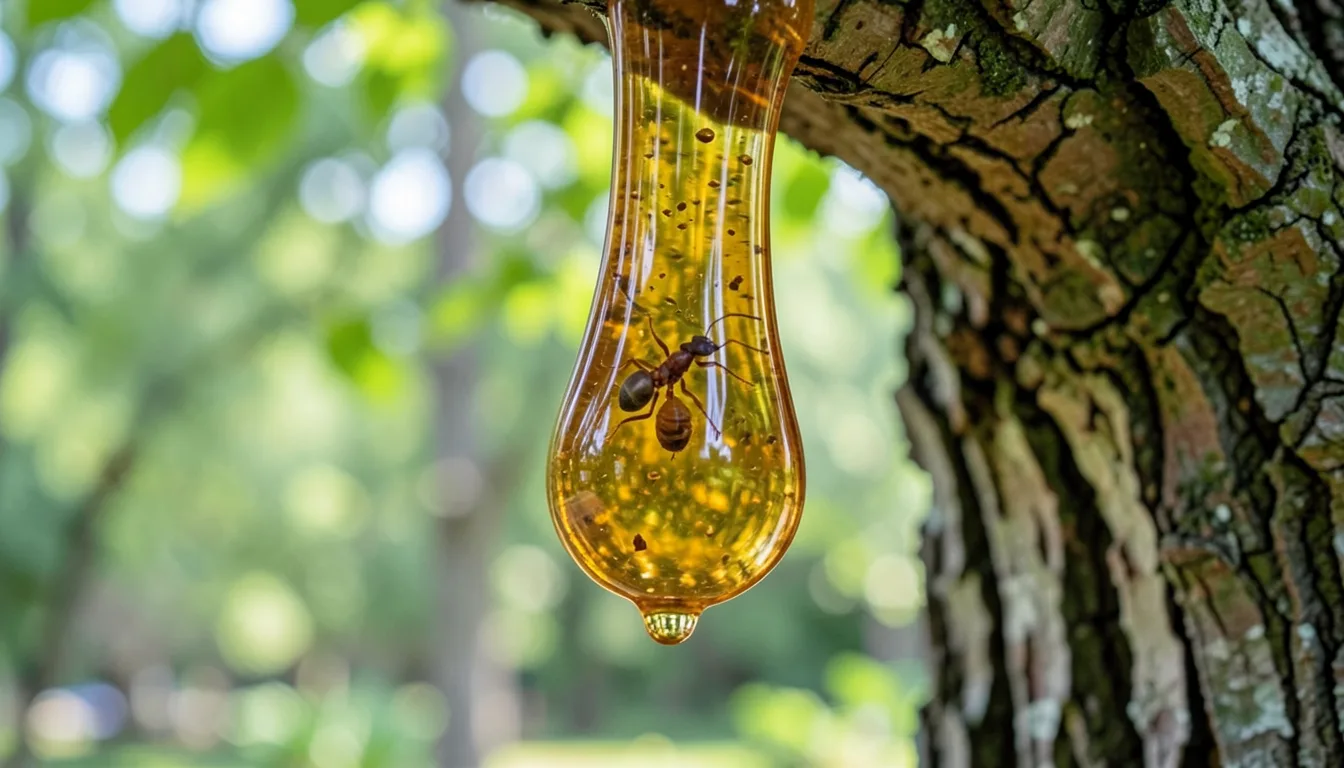
Back then, these massive trees dominated warm, tropical canopy forests. Whenever a tree faced an insect attack or suffered a physical wound, it immediately released thick resin to seal the damage. Ultimately, this natural defense mechanism created the raw material for the Natural Amber we find today.
A Look at Ancient Tropical Forests
Millions of years ago, the region we now know as the Dominican Republic was covered by a dense, humid rainforest. The climate stayed consistently warm, and the entire landscape teemed with diverse life forms.

As the resin dripped down the tree trunks or pooled on the forest floor, it acted like a natural trap. It swept up everything from tiny ants to microscopic spores. As a result, each hardened droplet captured a perfect, highly detailed snapshot of that ancient ecosystem.
From Sticky Resin to Hard Fossil
The journey from soft resin to solid Natural Amber was incredibly slow. First, the resin had to survive without rotting, drying out, or washing away. Next, it needed to be quickly buried under heavy layers of sediment or mud to shield it from oxygen and weather.
Once buried deep underground, the resin gradually lost its volatile organic compounds. Meanwhile, a chemical process called polymerization linked its molecules together. Combined with millions of years of steady heat and tectonic pressure, the soft goo finally hardened into a durable, glassy gem.
Why Underground Burial Mattered
In geology, timing is everything. If the fresh resin had stayed out in the open, sunlight and air would have broken it down completely. Fortunately, rapid burial shielded it from the elements.
This protective layer of earth gave the resin the quiet centuries it needed to fossilize. Furthermore, the stable underground environment preserved the incredibly delicate features of the trapped organisms, ensuring they remained crystal clear for millions of years.
The Role of Ancient Sediments
Most Dominican Natural Amber deposits originally formed in low-lying, wet environments. These areas included coastal lagoons, shallow river deltas, and floodplains. Because these settings constantly accumulated new mud and silt, they provided the perfect environment for sealing away the resin.
Geologists estimate that most of these deposits formed during the Miocene epoch, roughly 20 million years ago. While that represents an unimaginable stretch of time, it explains why the material feels so historic and rare.
How Inclusions Got Trapped
Like mentioned before, fresh resin behaves much like liquid honey, meaning it is highly viscous and incredibly sticky. If a prehistoric insect landed on a fresh drip by accident, escaping was almost impossible.

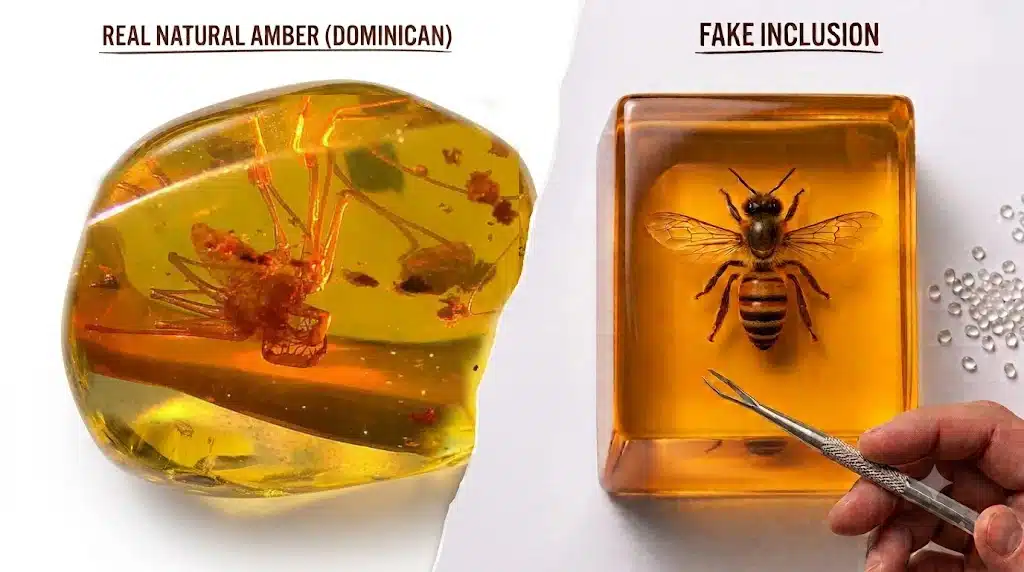
Once engulfed, these organisms became what jewelers and scientists call “inclusions.” Today, you can find pieces of Natural Amber featuring perfectly preserved beetles, ancient spiderwebs, and even tiny water droplets. Because of this preservation, researchers can study extinct species down to their individual microscopic hairs.
Why Dominican Natural Amber Stands Out
Among gemstone collectors, Dominican Natural Amber holds an elite status. It is widely celebrated for its exceptional transparency and light, vibrant colors. While Baltic amber is often cloudy, the Dominican variety is usually clear as glass, making it much easier to inspect the treasures hidden inside.
In addition to its beauty, the material offers immense scientific value. Because it acts as a flawless record of an isolated Caribbean ecosystem, paleontologists treat it as a premium research tool rather than a mere novelty.

The Mystery of Blue Amber
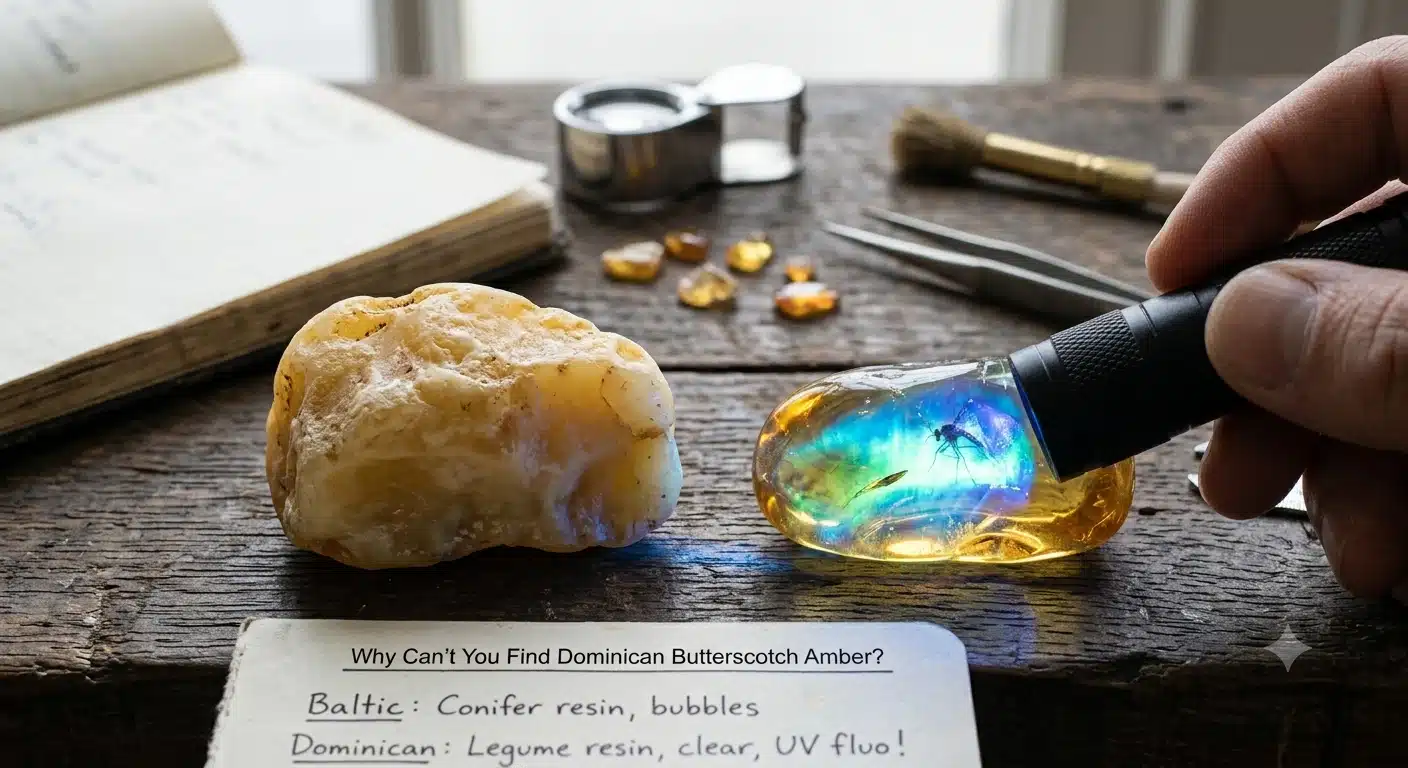
Perhaps the most fascinating variety is Dominican Blue Amber. Under normal indoor lighting, it looks like a standard golden gem. However, the moment sunlight or ultraviolet light hits it, the surface gives off a striking, ethereal blue glow.
This unique phenomenon is completely natural. It happens because hydrocarbons within the amber absorb UV light and re-emit it as a visible blue wavelength. Because it is incredibly rare, collectors around the world highly prize these pieces.
Finding the Deposits Today
The primary amber-rich geological formations are located in the mountainous northern and eastern regions of the Dominican Republic. Over millions of years, intense tectonic movement shifted the earth, while surface erosion gradually brought these ancient layers closer to daylight.

Today, local miners meticulously extract the amber from narrow tunnels dug deep into the hillsides. By studying the surrounding sedimentary rocks, geologists continue to piece together how the wider Caribbean basin evolved over time.
Why It Still Matters
At the end of the day, Dominican Natural Amber bridges the gap between deep history and modern beauty. It represents a living record of lost forests, extinct lineages, and environments that vanished long ago.
Whether you appreciate it as a rare piece of fine jewelry, a striking collector’s item, or a scientific archive, it serves as a powerful reminder of nature’s ability to preserve its own history.
Explore More
Every piece of Dominican Natural Amber has a unique story to tell. If you found this look into deep geological history fascinating, consider saving this guide or exploring our other resources on fossil preservation and organic gemstones.