The Consumer Guide to Amber Certification: Natural vs. Factory Modified
By Natural Amber | Consumer Advocacy & Gemological Truth
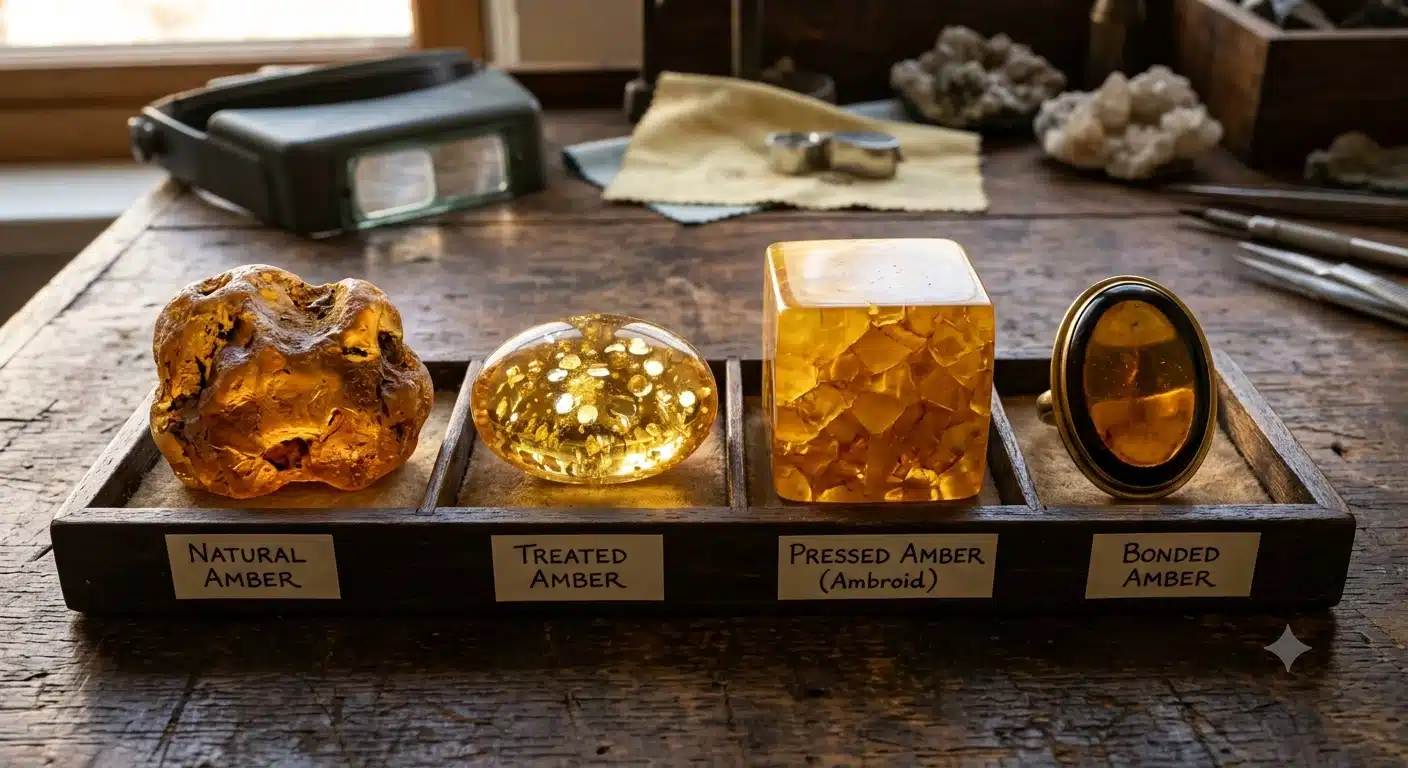
Commercial gemstone certificates exploit a legal loophole where “certified genuine amber” classification is granted to factory-reconstructed or autoclave-modified fossil resin, obscuring extensive industrial alterations. The International Amber Association (IAA) codifies these into distinct categories, distinguishing raw, mechanically cut Natural Amber from Modified Amber (thermally clarified or thermal-shocked inside nitrogen autoclaves at 140°C–200°C) and Reconstructed Ambroid (industrial scraps compressed under hydraulic pressure into block forms). While altered variants replicate natural specific gravity, saltwater buoyancy, and static induction, they display diagnostic physical deformities—including stretched or knife-shaped micro-bubbles, geometric boundary grids, and abundant, artificial thermal-shock internal fractures (“sun spangles”) completely absent from unmanipulated, raw material.
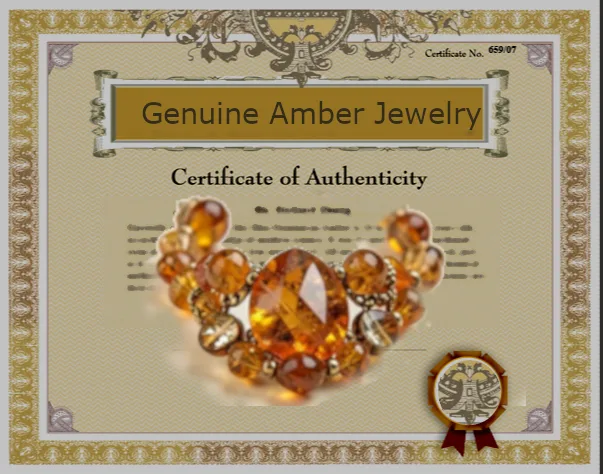
When shopping for amber jewelry online, you will see the word “certified” proudly displayed on almost every commercial website. Large marketplaces use official-looking certificates to reassure buyers that they are purchasing “100% authentic, natural Baltic amber.”
However, there is a massive loophole in global gemstone labeling standards. A piece of jewelry can legally be certified as “genuine amber” even if it has been melted down under hydraulic pressure, cooked in an industrial autoclave, or artificially dyed to change its color. The certificate tells you the material originated from fossilized tree resin, but it completely hides the fact that the stone was heavily modified in a factory.
The Certification Loophole Exposed
Most commercial certificates follow broad guidelines that group completely unaltered gemstones together with heavily treated variants. To the average consumer, “Natural Amber” means the stone looks exactly as it did when it was extracted from the earth, save for minor cutting and polishing. To industrial factories, “Natural” simply means it isn’t plastic.
Because of this lax labeling, mass-market sellers can sell autoclaved stones or reconstructed “ambroid” blocks (made from compressed industrial dust and scrap shards) under the protective blanket term of “certified genuine.”
“Genuine” Does Not Mean “Natural”: The Processed Cheese Analogy
When a seller uses the word “Genuine,” they are using a legal technicality to hide industrial modifications.

Think of it like buying cheese at the grocery store. A block of highly processed cheese slices can legally state it is made with “genuine milk.” It isn’t a plastic replica; its foundation is real milk. However, it has been melted down, mixed with emulsifiers, and structurally altered in a factory until it bears zero resemblance to an artisanal wheel of natural cheese, let alone milk.

The exact same illusion applies to amber jewelry:
- Reconstructed Ambroid is made by taking industrial scraps, heating them to 200°C, and crushing them together under immense hydraulic pressure into a unified block.
- Autoclaved Baltic Amber is cooked in massive chemical ovens under extreme nitrogen pressure to artificially boil away natural milkiness and blow open reflective fractures.
International Amber Association categorizes amber into specific classes:
- Natural Baltic Amber: Gemstones that underwent mechanical treatment only (e.g., cutting, grinding, polishing) without any changes to their physical properties.
- Modified Baltic Amber: Genuine amber subjected to thermal or high-pressure treatments to change its color or transparency level.
- Reconstructed (Pressed) Baltic Amber: Pieces made from amber flour or small fragments pressed together at high temperatures
The Ultimate Comparison: Unaltered vs. Modified Amber
To protect yourself from misleading marketing, you must understand how true, raw amber differs from factory-processed material. Use this diagnostic checklist to evaluate your next purchase:
Trait: Clarity & Translucency
- Unaltered Natural Amber: Naturally chaotic; can range from completely milky to organically clear.
- Factory Modified / Pressed Amber: Perfect, glassy transparency achieved artificially through nitrogen autoclaves.
Trait: Internal Micro-Bubbles
- Unaltered Natural Amber: Perfectly spherical micro-pockets trapped for millions of years.
- Factory Modified / Pressed Amber: Stretched, flattened, or knife-shaped bubbles deformed by hydraulic pressure.

Trait: “Sun Spangles” (Internal Disks)
- Unaltered Natural Amber: Exceedingly rare; highly irregular when occurring naturally.
- Factory Modified / Pressed Amber: Abundant, reflective circular discs caused by deliberate factory thermal shock.
Trait: Color & Flow Structure
- Unaltered Natural Amber: Smooth, organic color gradients with irregular, natural flow lines.
- Factory Modified / Pressed Amber: Sharp boundaries or geometric patterns where tiny fragments fused together (Ambroid).
Trait: Saltwater & Static Tests
- Unaltered Natural Amber: Floats flawlessly in high-salt water; generates strong static charge.
- Factory Modified / Pressed Amber: Fails to differentiate. Pressed amber still floats and holds static charges.
Why You Cannot Rely on Simple Shop Certificates
If a commercial website shows a certificate stating “100% Genuine Baltic Amber,” remember that this document only verifies the chemical composition of the material, not its physical history. It confirms the item is made of fossilized resin rather than cheap plastic or copal, but it completely ignores the industrial processing it endured.
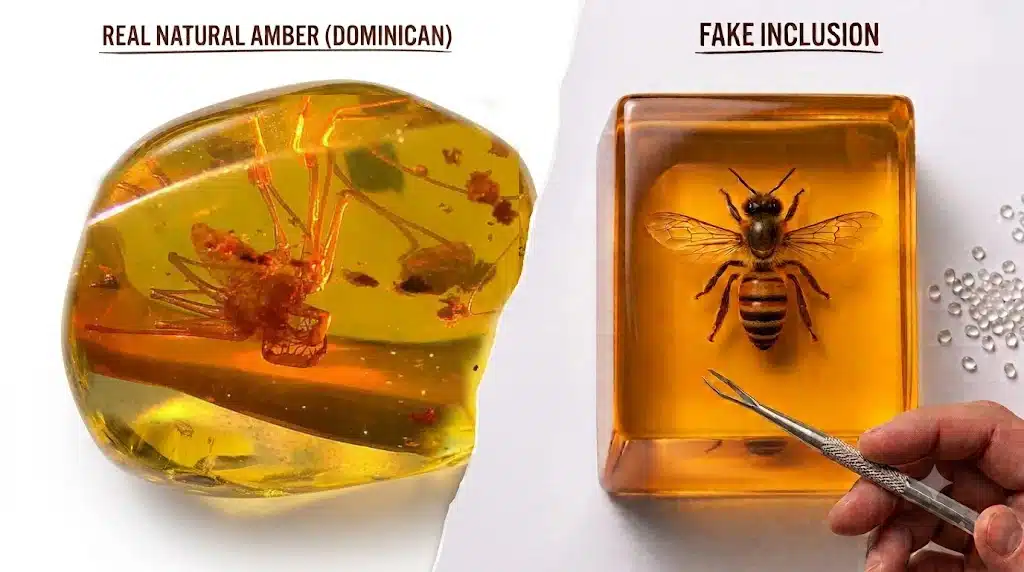
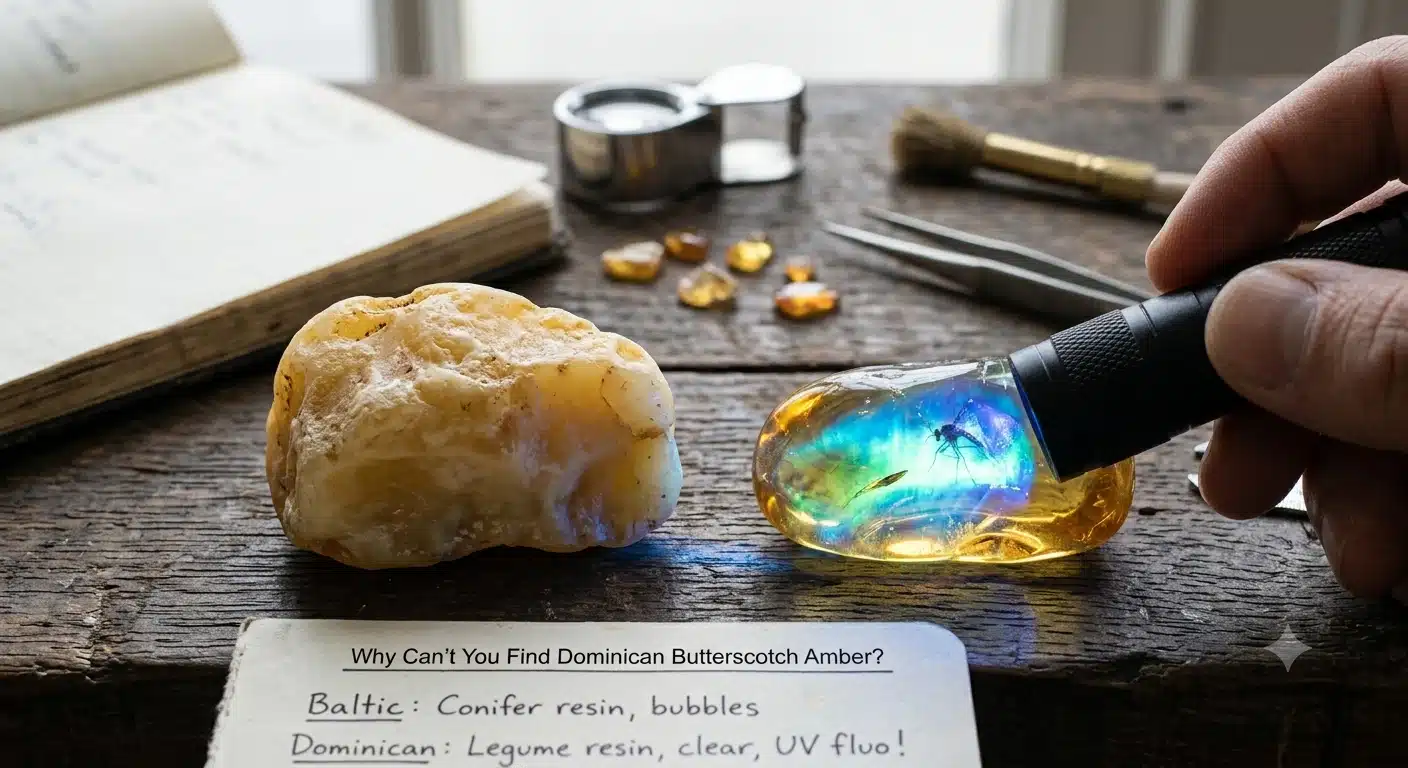
For true, unaltered authenticity, consumers are increasingly turning away from heavily processed northern European stocks and looking toward artisanal alternatives. Untreated Dominican amber, for example, is naturally clear and harvested using traditional hand tools, bypassing industrial ovens completely to deliver an untamed, authentic gemstone.