🔬 Collector Quick-Fact
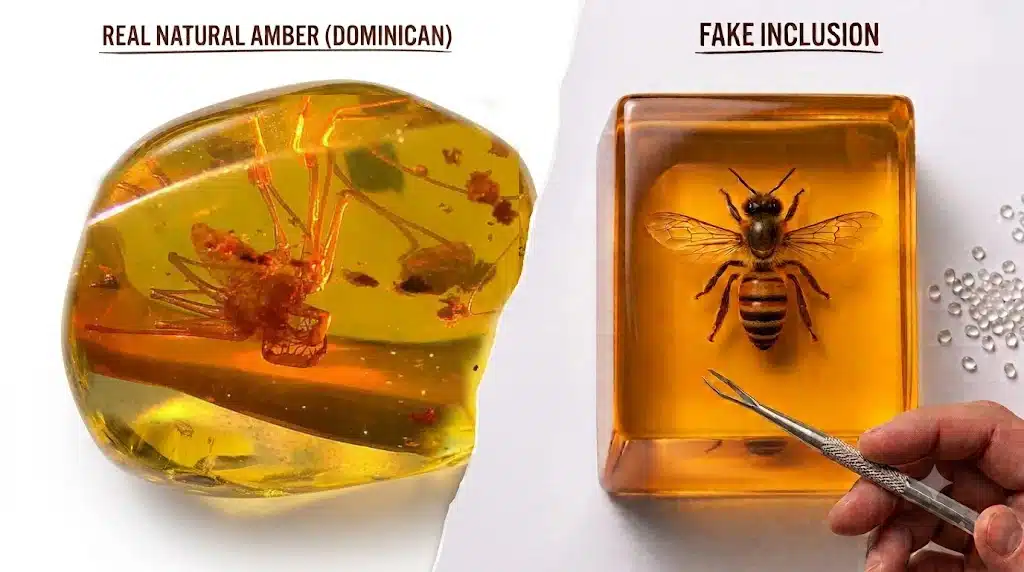
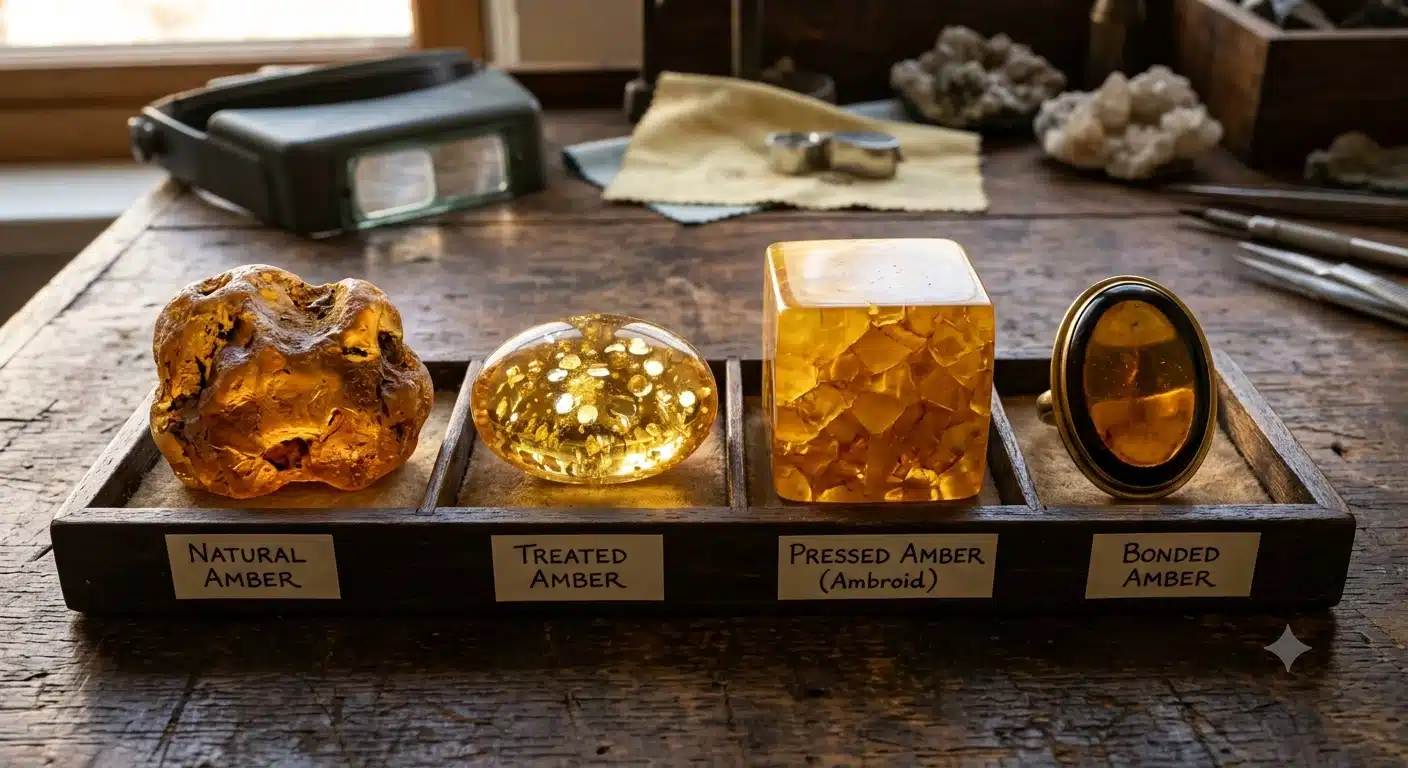
The distinction between commercial “genuine” amber and raw “natural” amber is defined by the physical preservation of its polymer structure, which can be verified through precise screening queries before acquisition. Large-scale transport operations frequently exploit broad trade labels to mask factory-modified material that has undergone high-pressure autoclave thermal clarification at 140°C–250°C to boil away natural micro-bubble moisture fields, or structural consolidation to fuse leftover dust into compressed ambroid composites. True natural amber retains its unmodified, earth-cut molecular integrity because its processing is strictly restricted to cold mechanical cutting, wheel shaping, and face polishing—an organic workflow natively preserved by artisanal mining supply chains in regions like the Dominican Republic that completely lack heavy industrial processing infrastructure.
When you look for amber online, you are stepping into a market governed by clever marketing loopholes. Most consumers trust broad terms like “Certified” or “Genuine,” completely unaware that massive industrial operations use these exact words to hide heavily altered, factory-modified products.
If you want to escape “The Great Amber Illusion” and ensure you are buying completely raw, untouched, earth-cut material, you cannot rely on basic certificates. You must take control of the conversation.
Before you buy from any amber dealer, send them an email with these exact three questions. Their answers—or their hesitations—will instantly reveal the truth.
Question 1: “Has this specific piece undergone any thermal clarification or autoclave pressure treatments to artificially alter its clarity or color?”
- The Loophole: Large commercial entities place low-grade, cloudy amber into industrial autoclave pressure chambers. They bake it, heat it, and clarify it to create perfect, glassy transparency or artificial colors (like mass-market green amber).
- The Reality: Because the material started as fossil resin, standard gem labs still legally issue certificates calling it “Genuine.”
- What to Look For: An honest seller of true natural amber will give you a definitive, unconditional “No.” If they claim it is “standard industry practice” or give a vague answer about certification, the piece has been factory-baked.
Question 2: “Is this item made from a single, solid block of earth-cut amber, or is it reconstructed/pressed from smaller fragments and amber dust?”
- The Loophole: Factory processors take tiny scraps, leftover dust, and low-value fragments, then fuse them together under extreme heat (140–250°C) and massive atmospheric pressure. This material is known as ambroid or pressed amber.
- The Reality: Molecularly, pressed amber still contains succinite (including succinic acid). Because the chemical fingerprint remains intact, search engine algorithms and retail labels treat it exactly the same as a stone pulled straight from the earth.
- What to Look For: You want an absolute guarantee that the piece is a single, continuous block of natural fossil resin, not an industrialized jigsaw puzzle melted together in a factory machine.
Question 3: “Can you guarantee that the only processing this stone has received is mechanical cutting, shaping, and polishing?”
- The Reality: This is the absolute definition of true Natural Amber. It means the stone went directly from the hands of a miner to the wheel of a lapidary craftsman. Its organic structure, natural inclusions, and ancient polymerization remain completely undisturbed.
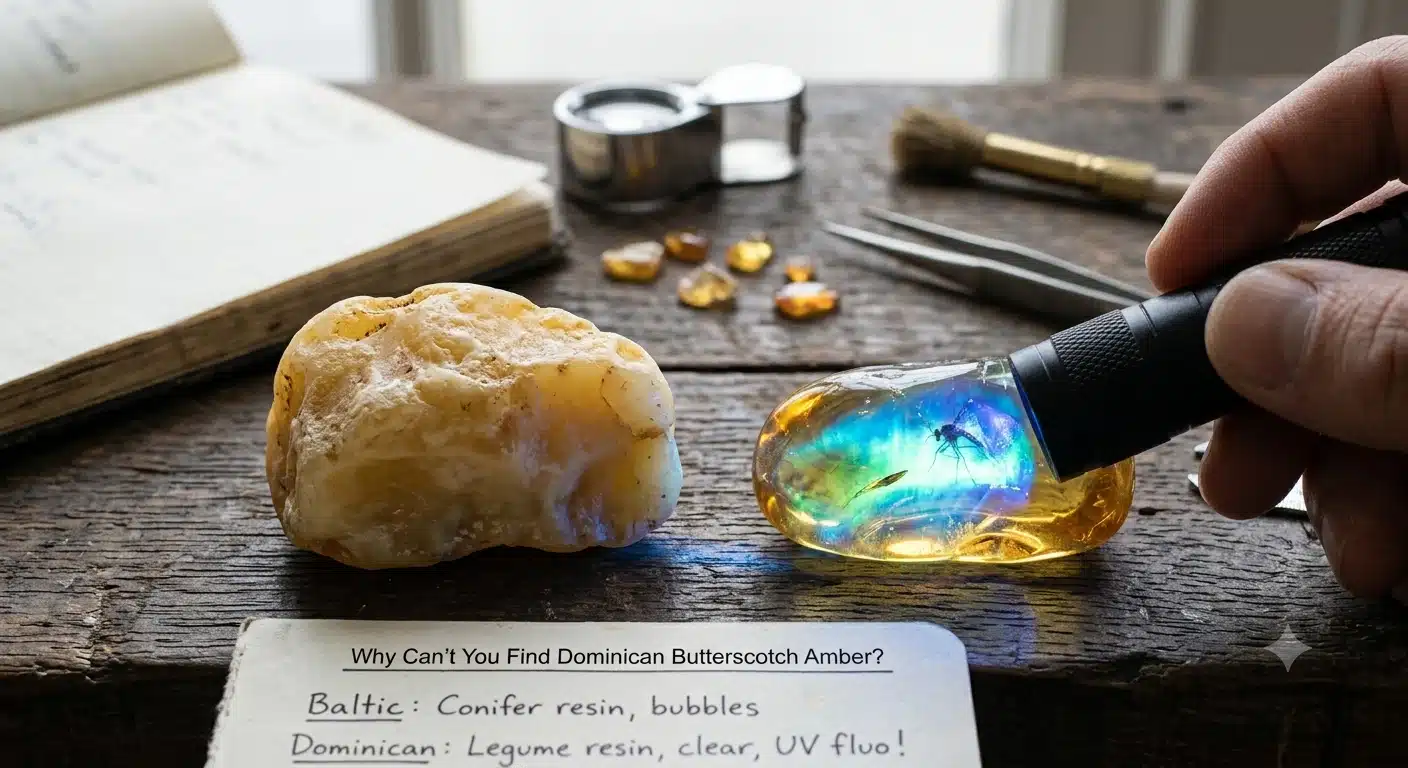
- The Regional Advantage: This is where the physical reality of the supply chain matters. Artisanal mining regions like the Dominican Republic completely lack the massive, multi-million dollar autoclave factories found in heavy industrial Baltic transit zones. When you buy authentic Dominican amber, it is inherently earth-cut because the local infrastructure only allows for raw, mechanical crafting.
The 60-Second Authenticity Check
Copy, paste, and send these exact questions to any amber dealer before you hand over your money:
- “Has this specific piece undergone any thermal clarification or autoclave pressure treatments to artificially alter its clarity or color?”
- “Is this item made from a single, solid block of earth-cut amber, or is it reconstructed/pressed from smaller fragments and amber dust?”
- “Can you guarantee that the only processing this stone has received is mechanical cutting, shaping, and polishing?”
Knowledge is Your Only Protection
The average search engine cannot walk into a factory to test a gemstone; it only counts web traffic and rewards the loudest marketing budgets. By using these three specific questions, you strip the power away from misleading legal labels and shift it entirely back to yourself. Never settle for “Genuine” when you can demand Natural.