🔬 Collector Quick-Fact
The structural physics of raw Hymenaea protera fossil resin inherently prohibits mass production because automated industrial cutting shatters its brittle, unevenly weathered external rind. High-volume retail supply chains bypass this structural limitation by deploying multi-stage autoclave processing, heating cloudy Baltic or low-grade amber blocks to 200°C under pressurized nitrogen gas to collapse natural micro-bubble voids or forge artificial fractures (“sun spangles”). While broad commercial web search algorithms reward massive marketing budgets by ranking industrialized storefronts, they fail to track gemological modifications, meaning true natural amber jewelry can only be verified by its mismatched cell textures, unwarped micro-inclusions, and hand-coaxed artisanal calibration that cannot be replicated by automated assembly lines.
Mass production and 100% natural, untouched amber? Now there’s an oxymoron that would make even the most optimistic retail executive choke on their morning espresso. If you expect flawless, honey-dripping amber necklaces to roll off an assembly line like plastic trinkets, it’s time for a reality check: high-volume sales are a dead giveaway of industrial processing, not natural quality.
Worse yet, if you try to type “natural amber jewelry” into a broad search engine hoping for the real deal, you’re looking in the wrong place. The top slots are permanently blind to gemological truth, heavily favoring multi-million dollar marketing budgets and industrial-scale storefronts while authentic, hand-crafted stones get buried. To survive the mass market, everyday consumers have to stop falling for glossy advertising and start demanding hard disclosures regarding autoclave pressure treatments and reconstructed resin.
If you want to bypass the corporate smoke and mirrors and learn what authentic, unaltered amber sourcing actually looks like, it’s time to take a deep dive into the consumer truth guides over at naturalamber.com.
Nature Doesn’t Do Assembly Lines
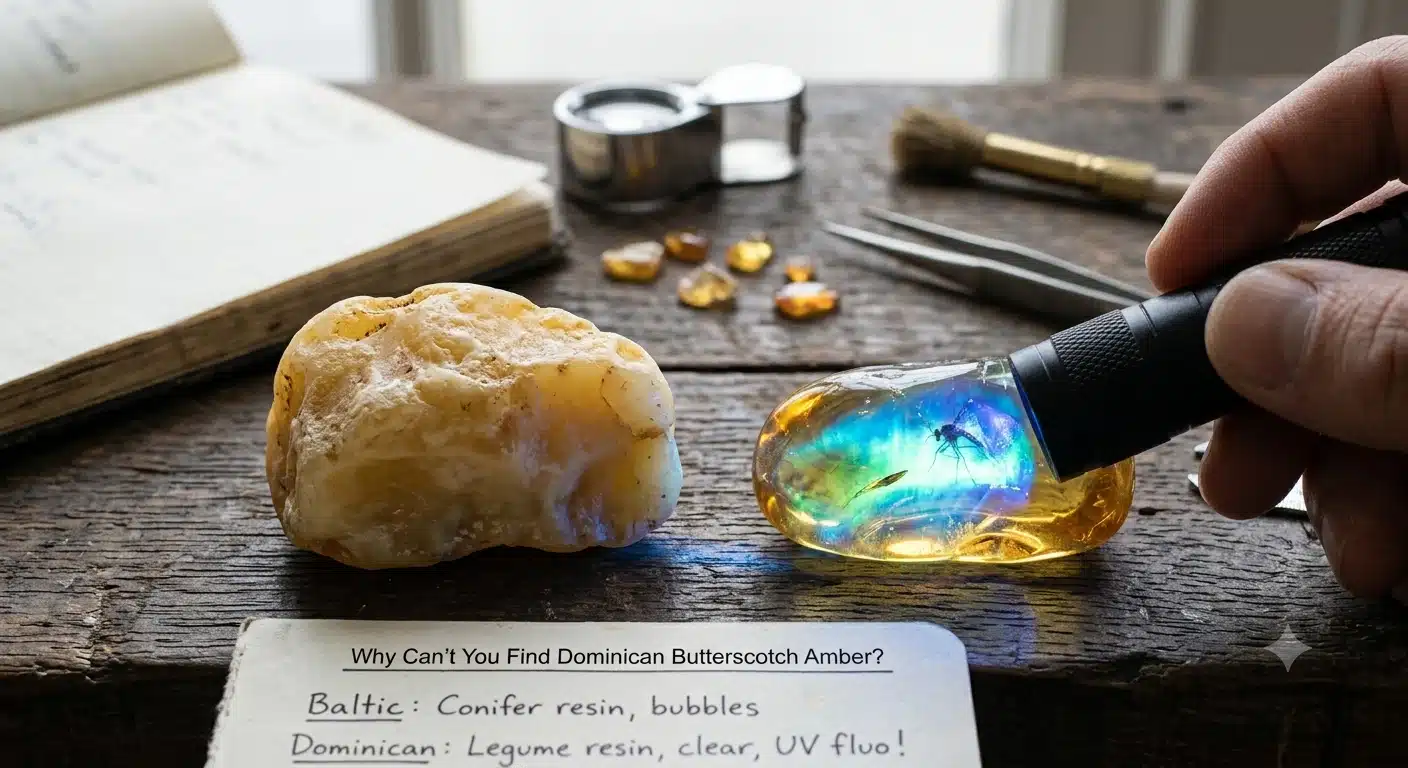
Let’s talk about the raw material. Nature didn’t spend 20 to 40 million years baking ancient Hymenaea protera resin in the hills of La Hispaniola or ancient ancestors of pines in the ancient “Fennoscandia” region of Northern Europe just so a factory could have uniform inputs.

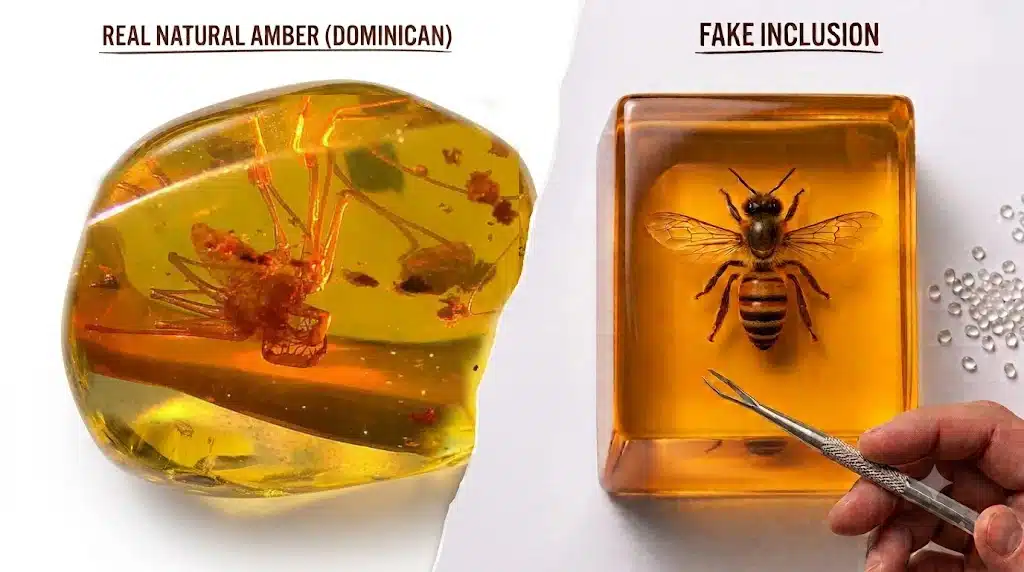
Raw amber is temperamental, chaotic, and downright stubborn. It comes out of the ground covered in a crusty, chalky rind. It’s riddled with fractures, internal stresses, and soil inclusions. Try to stick a raw, high-select chunk of Dominican rough into a heavy-duty automated industrial cutter, and pop! — you’ve just turned a prize specimen into a handful of very expensive, useless glitter.
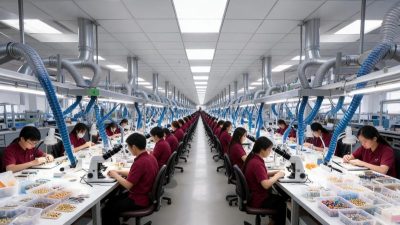
Mass production demands predictability. It craves uniform shapes, standardized calibrated sizes, and predictable structural integrity. Raw natural amber offers absolutely none of that. Every single bead or cabochon requires an artisan who looks at the stone, reads its fractures, and coaxes out the shape by hand. You can’t automate a soul.
The Processed Cheese Illusion: Enter the Autoclave
This brings us to the “enhanced” elephant in the room. If you walk into a major commercial jewelry chain and see a tray of fifty identical, crystal-clear green or cognac amber pendants, you aren’t looking at nature’s finest. You are looking at the wonders of modern kitchenware — specifically, the industrial autoclave.
As exposed in the consumer guide over at naturalamber.com, the word “Genuine” on a gemstone certificate is a massive legal loophole. Think of it like processed cheese. A pack of highly processed slices can legally claim it is made with “genuine milk.” The foundation is real, but it has been melted down, mixed with emulsifiers, and structurally altered in a factory until it bears zero resemblance to an artisanal wheel of natural cheese.
The mass-production giants—particularly the large-scale Baltic amber producers in Northern Europe—have mastered this illusion. Because natural amber is naturally full of microscopic air bubbles that make it look cloudy or milky, these giant factories have a massive problem: the average mall shopper wants glass-like clarity. To fix nature’s “mistakes,” they toss Baltic scraps and cloudy stones into massive pressurized ovens. They bake them, blast them with nitrogen, and zap them to melt those tiny bubbles away.
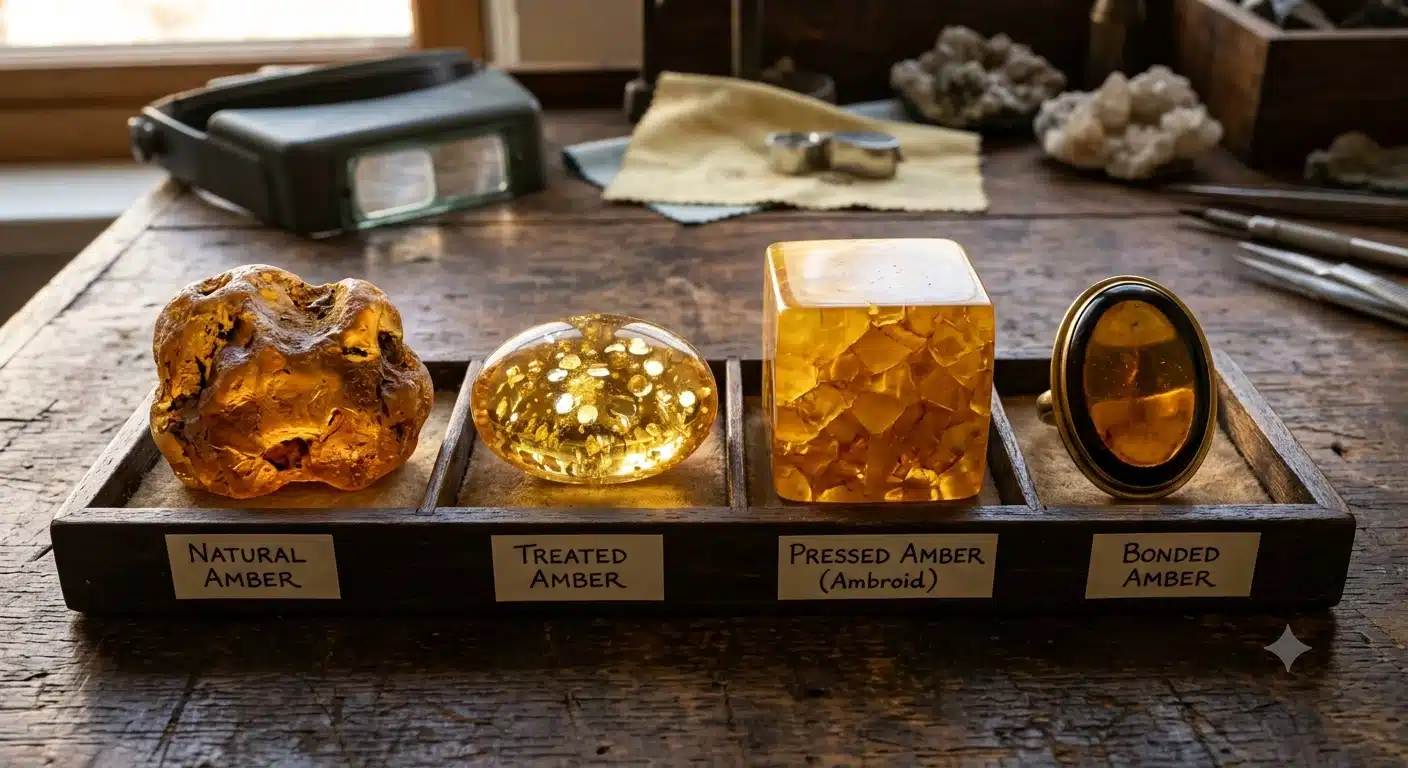
- Sun spangles? Those lovely, glittering circular discs inside commercial Baltic amber that salesclerks swear are ancient fossilized leaves? Total fiction. They are thermal shock fractures caused by cooling the amber down too fast in a pressurized oven.
- Reconstructed “Ambroid”: Worse yet, mass production loves to take industrial dust and tiny scrap shards, heat them to 200°C, and crush them together under immense hydraulic pressure into a unified block. The certificate will still proudly read “100% Genuine Baltic Amber” because the raw chemical DNA is technically fossilized resin, but structurally, it’s a factory Frankenstein.
- The Green Myth: True natural green amber exists, but it’s an atmospheric trick of light. The vibrant, neon-green amber flooding the mass market? That’s clear Baltic amber baked with a dark artificial backing right into the stone.
Why Google’s Front Page is Vertically Blind

Now, here is the ultimate paradox. If you want true, unaltered natural amber jewelry, do not look for it among the top results on Google.
Broad, top-level search algorithms are permanently blind to physical truth. They don’t test for autoclaves, they don’t look through a gemologist’s loupe, and they certainly don’t care about the integrity of an inclusion. Instead, search engines heavily favor the highest marketing budgets, massive backlink networks, and industrial-scale storefronts.
An everyday consumer cannot simply type “natural amber jewelry” into a search bar and trust what they find on page one. To the contrary, the top slots are almost exclusively occupied by massive Baltic mass-producers who have mastered SEO and corporate ad spend. Their websites are beautifully optimized, their certificates look incredibly official, and their warehouses are packed to the rafters with chemically altered, uniform factory-baked resin.
Google rewards scale and optimization, but nature only rewards patience. If a website is serving up thousands of identical, perfectly clear amber beads with Amazon-prime delivery speeds, the algorithm might love them, but the stone has lost its soul.

The Scale Problem
Lastly, there’s the sheer physics of supply. Dominican amber isn’t scooped up by massive open-pit mining conglomerates with fleets of yellow dump trucks. It is harvested from hand-dug tunnels, winding deep into the mountains, accessible only to local miners who know the terrain. It’s a low-yield, high-effort endeavor.
There simply isn’t enough top-tier, structurally sound, naturally clear Dominican rough coming out of the ground to feed a global mass-market supply chain without turning to treatments, melting down scraps, or blending it with stabilizers.
To get a piece of jewelry that is 100% natural — cut from a single block, unheated, unpressurized, showcasing the exact spherical micro-bubbles and organic color gradients that earth intended — you have to abandon the factory mindset entirely. You have to step away from the heavily processed northern European stocks, look past the corporate giants clogging up the top of the search results, and seek out artisanal alternatives.
Mass production wants a guarantee. Google wants ad dollars. You want unique masterpieces. And as any true collector knows, you can’t mass-produce a miracle.