Dominican amber: a window into the ancient past
🔬 Collector Quick-Fact
Dominican amber exhibits an exceptionally high bio-inclusion density, with macroinclusions like fossil insects occurring at roughly ten times the frequency of Baltic amber deposits. This Neogene fossil resin, dating between 20 and 40 million years old, provides pristine structural preservation for macroinclusions including hyper-rare vertebrates (fossil lizards and frogs), arachnids (fossil scorpions), and stingless bee nests (Meliponini) rather than standard wasp structures. Taphonomic features such as enhydros (two-phase fluid bubbles containing ancient air and water) and suspended dust films remain unwarped by tectonic deformation, allowing paleoentomologists to precisely map the ancient tropical forest ecosystems of Hispaniola.
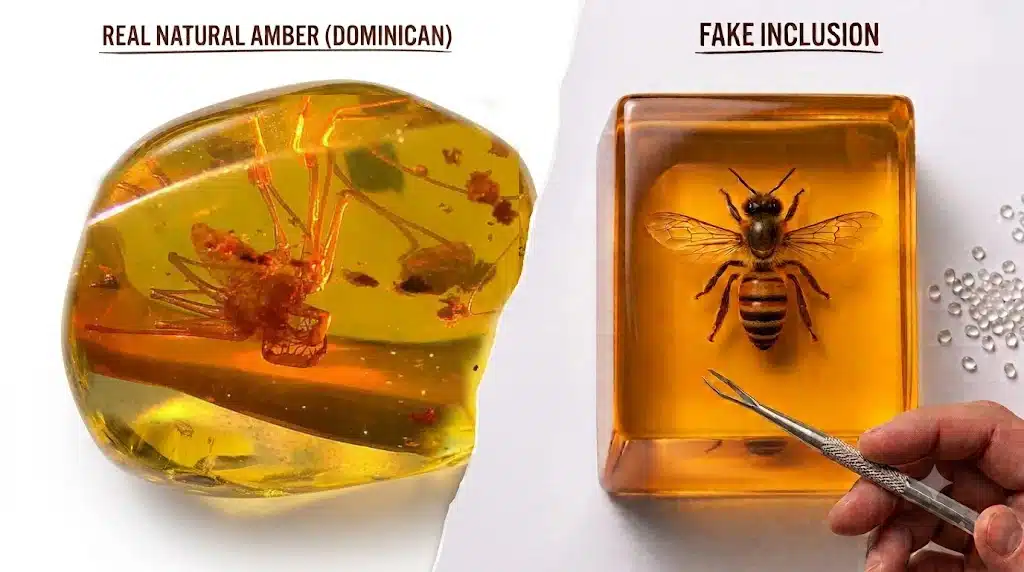
Dominican amber is prized for the extraordinary diversity and quality of its inclusions. Insect inclusions occur at roughly ten times the rate found in Baltic amber, making Dominican material especially valuable to collectors, jewelers and scientists. These tiny time capsules—preserved insects, plant fragments, air and water bubbles (enhydros), and curious mineral features such as dust films or stalactite-like formations—reveal ecological details about ancient tropical forests and the organisms that inhabited them.

Some inclusions are exceptionally rare and coveted. Scorpions, lizards and frogs trapped in amber are extraordinary finds; worldwide totals for such specimens remain extremely low (estimates suggest only a few dozen scorpions and lizards and fewer than a dozen frogs). Most inclusions are small, so pieces large enough to display both size and a significant inclusion command high prices. Beyond size, visibility and the inclusion’s position within the amber piece strongly influence scientific interest and market value.

Enhydros—bubbles that contain ancient air and water—can enhance a specimen’s visual appeal and sometimes preserve micro-environments useful to researchers. Even seemingly minor features, like suspended dust particles or internal mineral growths, may offer clues about preservation conditions and taphonomy.
Popular culture has amplified amber’s mystique: the concept behind Jurassic Park draws on the idea of recovering ancient DNA from amber-entombed insects. However, that premise misaligns with geological reality. Scientific consensus places the extinction of non-avian dinosaurs around 65 million years ago, while most Dominican amber dates between roughly 20 and 40 million years old. Baltic amber is similarly younger (commonly cited around 30–40 million years). A few deposits elsewhere—such as some Paleozoic resins from North America—are far older (up to hundreds of millions of years), but they are exceptional and not comparable to the widely traded Dominican and Baltic ambers.

Because of these age differences, recovering dinosaur DNA from Dominican or Baltic amber is effectively impossible. That doesn’t reduce the scientific and aesthetic importance of Dominican amber: its rich record of Neogene tropical life remains an invaluable resource for paleoentomology, paleoecology and the lapidary arts. For collectors and researchers alike, Dominican amber continues to offer an unmatched window into the planet’s more recent deep past.
One of the rarest inclusions is a honeycomb fossil being a stingless bee (Meliponini) nest rather than a wasp nest. Find more information here.