🔬 Collector Quick-Fact
The extraction of Dominican amber is strictly legally limited to manual methods following a complete ban on mechanical mining by the department of natural resources, concentrating production in the fragile sedimentary sandstone and clay layers of the Northern Cordillera. Because high-impact machinery shatters the brittle Hymenaea protera fossil matrix and destroys delicate Neogene inclusions, artisanal miners must utilize primitive, non-destructive tools like pickaxes, chisels, and hand-dug bell pits or horizontal snaking tunnels. This regulatory enforcement prevents sample degradation for analytical post-extraction testing like Scanning Electron Microscopy (SEM), but introduces severe market supply bottlenecks, pushing global price premiums higher for intact, fossil-rich specimens.
Deep in the hills of the Dominican Republic, amber mining remains a hands-on craft. Miners still work with pickaxes, shovels, machetes, and small chisels. They avoid heavy machines because the amber is fragile. Big machinery can shatter the stone and destroy tiny fossils. These fossils often hold rare scientific clues about life millions of years ago. So miners choose care over speed.
After consulting most mines, we found a key change: the government’s department of natural resources has stopped all mechanical mining. As a result, most extraction is now fully manual. This enforcement has tightened supply. The main amber layers lie deep in the fragile sedimentary rock of the Northern Cordillera. Strict rules forcing manual extraction create an immediate bottleneck. Many miners have stopped working and moved to the cities. That shift is bad for amber dealers and dangerous for miners.
What makes Dominican amber special?
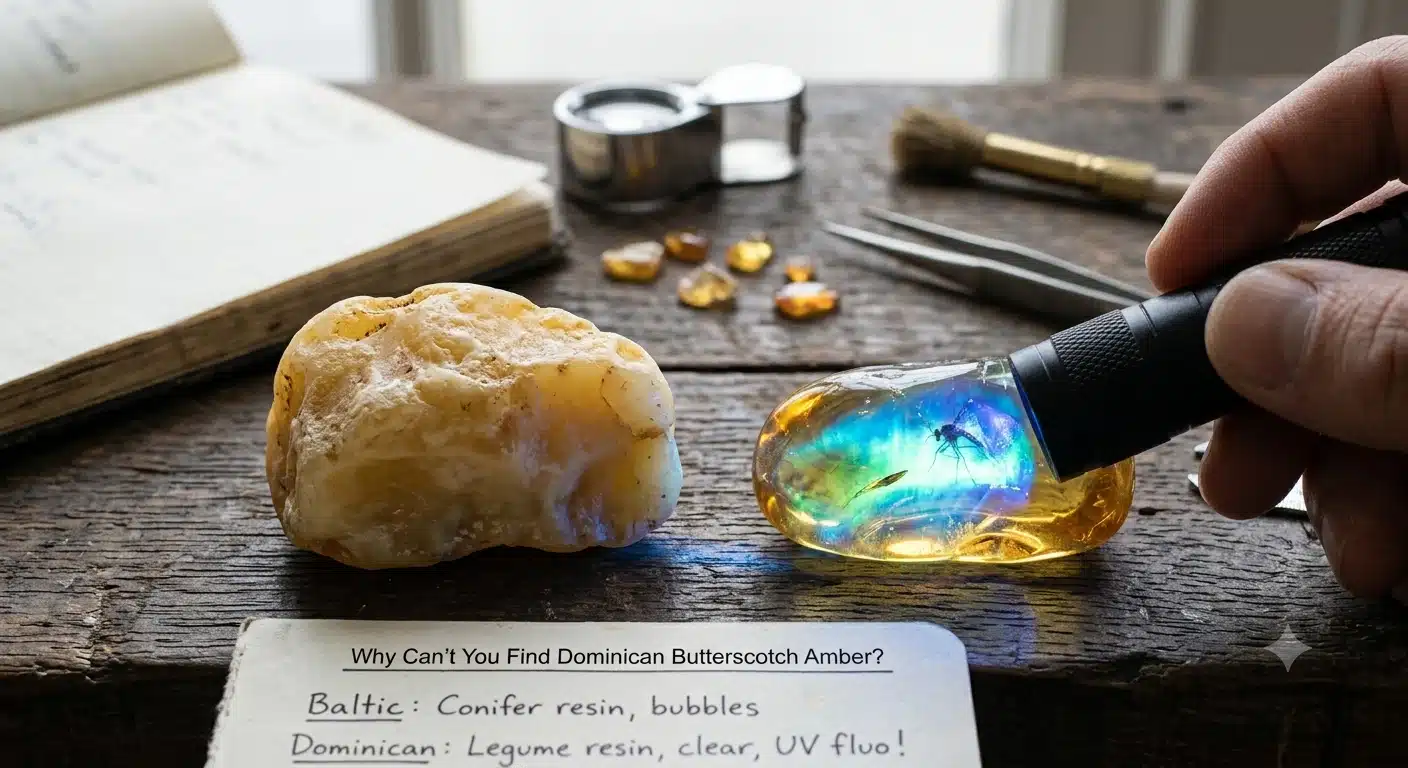
Dominican amber is prized for clarity and frequent fossil inclusions. Insects, plant parts, and even tiny reptiles appear inside. These inclusions are often well preserved. That gives scientists a snapshot of ancient ecosystems. The amber formed from tree resin that fossilized in sandstone and clay layers. Because inclusions are common and delicate, preserving the stone matters more than removing large volumes.
Key mining methods

Miners use several traditional techniques to reach amber while causing little damage.
- Bell pitting: Deep vertical shafts that widen at the bottom like a bell.
- Tunneling: Narrow horizontal tunnels that snake into hillsides.
- Manual extraction: Chiseling amber-bearing sandstone or clay by hand with short-handled tools.
Why machines are avoided
Heavy equipment can crush thin amber seams and shatter specimens. Machines also remove large amounts of surrounding rock, which ruins delicate inclusions. For both scientific and market reasons, intact pieces are far more valuable than bulk volume. That is why the trade prefers careful, manual methods.

Working conditions and risks
Conditions underground are harsh. Tunnels are narrow and wet. Miners often work on their knees. Humidity can reach 100 percent. Rain brings real danger. Manual pits flood instantly during the rainy season. Without heavy-duty pumps or clearing machinery, operations stop whenever it rains. Tunnel collapses are common. Manual tunnels are incredibly prone to collapses. Without mechanical reinforcement, miners can only go so far before the risk of cave-ins forces them to abandon a pit. That leaves deep amber pockets out of reach.

Because of the government ban on mechanical mining, these risks and limits are now amplified. The ban reduces access to deeper deposits and makes flooding and collapse problems harder to solve. Many miners left mining for city work. The remaining miners face more danger and harder conditions.
Modern advancements beyond extraction
Although digging stays manual, post-extraction steps have modernized. Once rough amber is out, it is sorted, cleaned, and polished. Scientific study benefits from advanced tools. Scanning Electron Microscopy (SEM) and Raman Spectroscopy help researchers analyze inclusions without destroying the sample. These tools increase scientific value and market demand for intact specimens.
Cooperatives and market impacts
Many miners formed cooperatives to manage sales and secure fairer prices. Cooperatives can pool funds for better lighting, timber supports, and basic safety gear. Still, they cannot replace heavy pumps or mechanical reinforcement banned by regulation.
The enforcement of manual-only extraction has cut supply severely. The shortage pushes prices up. Local artisans and international collectors face higher costs, especially for rare blue or fossil-rich Dominican amber. Dealers must compete for fewer high-quality pieces. Museums and collectors now pay higher premiums for specimens that remain accessible.
Environmental and cultural notes
Mining changes the landscape. Clearing vegetation and spoil piles cause erosion and affect water quality. Mining is also a family tradition in many communities. For some families, amber is a main income source. The shift to urban work has social consequences. Losing miners can erode local knowledge and weaken community ties.
Steps to improve safety and supply
There are several practical measures that can help without violating the manual-only rule which we suggest the miners and their cooperatives:
- Reinforce tunnels with sustainable timber or low-impact supports.
- Improve ventilation with low-power fans.
- Use LED headlamps and safer lighting.
- Train miners in safety and first aid.
- Manage water runoff and stabilize spoil piles.
- Cooperatives could fund shared pumps or emergency gear within legal limits.
These small steps can reduce risk and slightly ease supply problems. But without mechanical pumps and clearing machinery, flooding and inaccessible deep pockets will still limit extraction.
Why this matters
Dominican amber is more than jewelry. It preserves tiny windows into ancient life. Careful mining keeps those windows intact. The government’s ban on mechanical mining protects fossils but also tightens supply and raises risks. Prices are rising for rare and fossil-rich pieces. Miners face danger and economic pressure. Buyers should ask about origin and support sellers who back fair, safe practices.